Sock MOQ & Pricing Strategy Guide 2026: Master Wholesale Economics
Everything B2B buyers need to understand about sock MOQ and pricing: factory cost structures, negotiation tactics, volume discounts, and profit margin optimization from 100 to 10,000+ pairs.
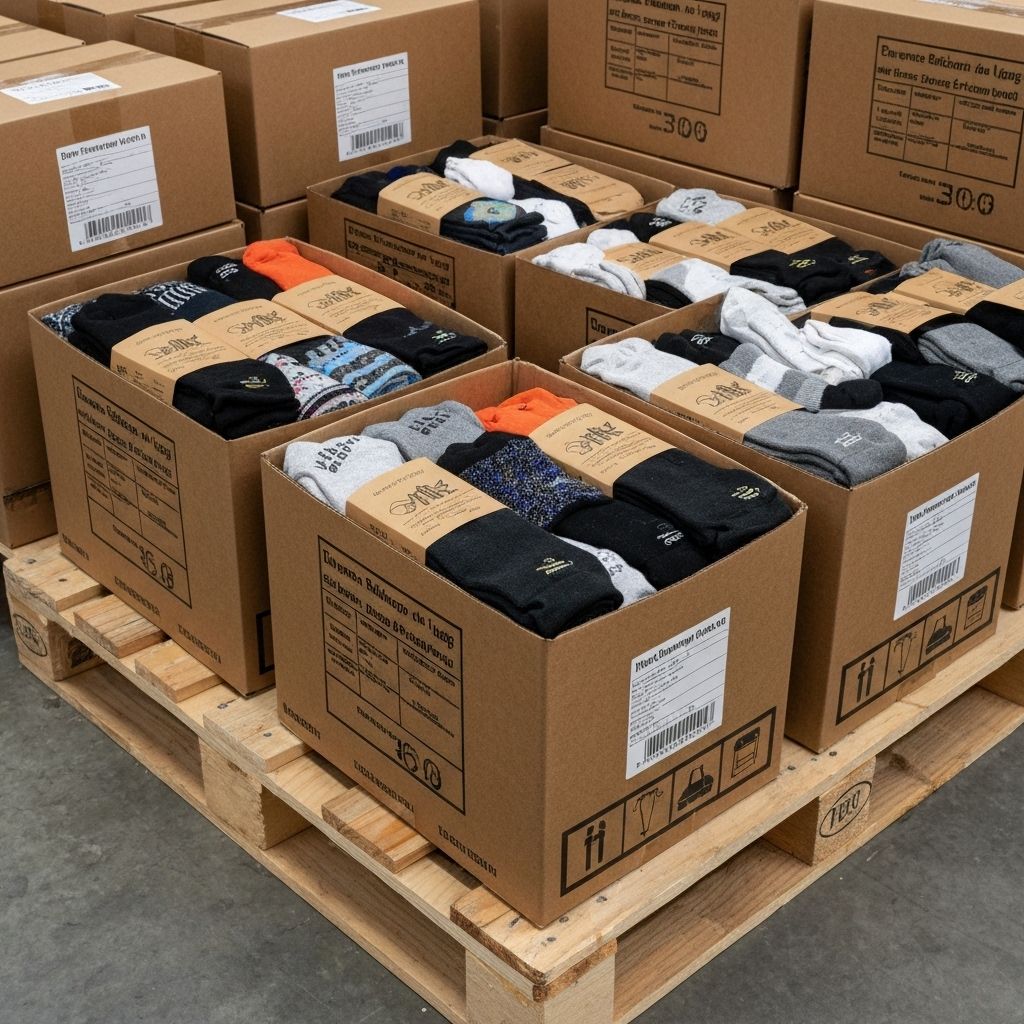
Understanding MOQ (Minimum Order Quantity) and pricing structures is fundamental to successful sock sourcing. This guide breaks down the economics of sock manufacturing, helping buyers at all scales—from startup brands to major retailers—make informed purchasing decisions and negotiate effectively with suppliers.
Table of Contents
Understanding Sock MOQ
MOQ exists because manufacturers need to cover setup costs and achieve production efficiency. Understanding the factors that drive MOQ helps you negotiate better terms:
Why MOQ Exists
- Machine setup: Each style requires machine reprogramming
- Yarn changeover: Color changes waste material
- Quality consistency: Larger runs are more consistent
- Efficiency threshold: Small runs are disproportionately costly
Typical MOQ Ranges
- Stock/blank socks: 50-100 pairs
- Simple custom: 100-300 pairs per SKU
- Complex design: 500-1,000 pairs per SKU
- Jacquard/full custom: 1,000-3,000 pairs per SKU
Factors Affecting MOQ
- Design complexity: Simple stripes vs. detailed jacquard patterns
- Number of colors: Each color adds setup time and yarn waste
- Custom vs. stock: Existing designs have lower MOQ
- Factory capacity: Larger factories may have higher MOQ
- Relationship: Repeat customers often get reduced MOQ
Manufacturing Cost Breakdown
Understanding where your money goes helps you identify negotiation opportunities and make informed sourcing decisions:
| Cost Component | % of Total | Factors |
|---|---|---|
| Raw Materials (Yarn) | 35-50% | Fiber type, quality grade, origin |
| Direct Labor | 15-25% | Country, skill level, automation |
| Manufacturing Overhead | 10-15% | Utilities, maintenance, depreciation |
| Quality Control | 3-5% | Inspection, testing, compliance |
| Packaging | 5-15% | Type, customization, materials |
| Factory Margin | 10-20% | Volume, relationship, competition |
Wholesale Pricing Tiers
Pricing varies significantly based on order volume, complexity, and product category. Here are typical FOB (Free on Board) price ranges:
| Product Category | 100-500 pairs | 500-2,000 pairs | 2,000-10,000 pairs | 10,000+ pairs |
|---|---|---|---|---|
| Basic Athletic | $1.80-2.50 | $1.40-1.80 | $1.00-1.40 | $0.80-1.00 |
| Custom Logo | $2.20-3.00 | $1.60-2.20 | $1.20-1.60 | $0.90-1.20 |
| Full Jacquard | $3.00-4.50 | $2.20-3.00 | $1.60-2.20 | $1.20-1.60 |
| Performance/Tech | $3.50-5.00 | $2.50-3.50 | $1.80-2.50 | $1.40-1.80 |
| Premium Materials | $4.00-7.00 | $3.00-5.00 | $2.20-3.50 | $1.80-2.50 |
Volume Discount Formula
As a general rule, each doubling of order quantity typically yields a 10-15% price reduction. This reflects the fixed cost distribution across more units and improved manufacturing efficiency.
MOQ Negotiation Tactics
1. Consolidate SKUs
Rather than ordering 3 colors at 100 pairs each, order 300 pairs of one color. This meets production efficiency thresholds and gets you better pricing.
2. Accept Stock Colors
Using yarn colors the factory already stocks eliminates setup time and minimum yarn purchases. This can reduce MOQ by 30-50%.
3. Simplify Design
Reduce the number of colors or complexity of patterns. A 3-color design may have half the MOQ of a 6-color design.
4. Commit to Volume
Provide a forecast for future orders. Factories may reduce initial MOQ if they see potential for larger ongoing business.
5. Pay for Setup
Offer to pay a one-time setup fee ($50-200) in exchange for lower MOQ. This covers the factory's fixed costs directly.
Retail Margin Analysis
Understanding the full cost picture helps you price competitively while maintaining healthy margins:
| Cost Element | Example Amount | Notes |
|---|---|---|
| FOB Price | $2.00 | Factory price per pair |
| Shipping (Sea) | $0.15-0.30 | Varies by volume and destination |
| Import Duties | $0.20-0.40 | US: 10-15% on socks |
| Customs/Handling | $0.05-0.10 | Broker fees, documentation |
| Landed Cost | $2.40-2.80 | Total cost to warehouse |
| Wholesale Price (2x) | $4.80-5.60 | To retailers |
| Retail Price (2.5x wholesale) | $12.00-14.00 | Consumer price |
Strategies for Startups
Low MOQ Options
- Blank/stock socks: 50-100 pair MOQ
- Print-on-demand: No MOQ, higher cost
- Sample orders: Test market before committing
- Mixed containers: Share shipping with others
Cost Management
- Start simple: Basic designs, fewer colors
- One style first: Prove concept before expanding
- Pre-orders: Validate demand before production
- Crowdfunding: Fund initial inventory
VelonSocks Startup Program
We offer special terms for new brands: MOQ as low as 100 pairs for custom designs, sample programs, and flexible payment terms. Contact us to discuss your launch strategy.
Scaling Your Orders
As your brand grows, strategic scaling can significantly improve margins:
- Forecast planning: Share 6-12 month projections for better pricing
- Blanket orders: Commit to annual volume for fixed pricing
- Production scheduling: Fill factory low periods for discounts
- Yarn hedging: Lock in material prices for price stability
- Vertical integration: Direct factory relationships vs. trading companies
| Annual Volume | Typical Savings | Additional Benefits |
|---|---|---|
| 1,000-5,000 pairs | Base pricing | Sample support |
| 5,000-20,000 pairs | 10-15% off | Priority production |
| 20,000-50,000 pairs | 15-25% off | Dedicated capacity |
| 50,000+ pairs | 25-35% off | Custom terms, exclusivity options |
Get Custom Pricing
Contact VelonSocks for a detailed quote based on your specific requirements. We offer flexible MOQ options and competitive pricing for brands at every stage.